

Art and creativity play an essential role in children’s development. From enhancing motor skills to encouraging imaginative thinking, drawing is one of the simplest yet most effective ways to inspire these skills. Today, we’re focusing on an exciting and engaging subject that kids love—tigers!
This blog will walk you through fun and simple steps for drawing tigers, ranging from easy cartoon versions to more realistic designs. Whether you’re a parent, educator, or child looking for creative inspiration, you’ll find actionable tips and techniques for every skill level. By the end of this post, kids will be ready to bring their tiger art to life while learning about these magnificent creatures.
Why Tigers? A Roaring Fascination
Why tigers? There’s a universal fascination with these majestic animals. Tigers aren’t just visually stunning—they’re also a symbol of strength and courage, making them an exciting subject for young artists.
Drawing tigers can be both fun and educational for kids. Art projects centered around tigers provide opportunities to discuss their habitats, physical characteristics, and why they’re endangered. Plus, kids are naturally drawn to animals, so tiger drawings become a gateway to inspire curiosity about nature and wildlife conservation.
Now, grab your pencils, markers, and maybe a touch of orange and black, and let’s start drawing!
How to Draw a Tiger
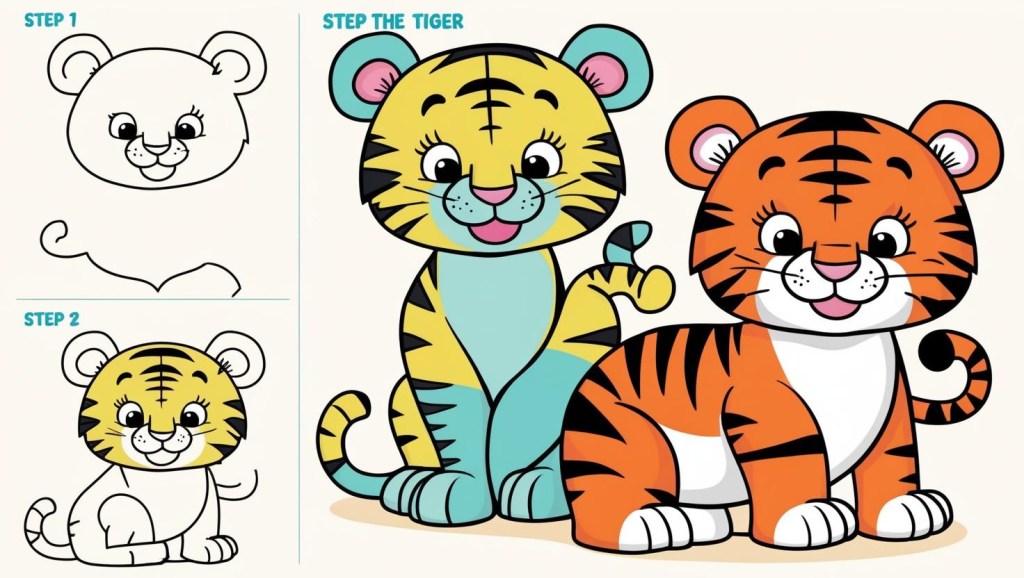
Here’s how to create your own tiger masterpiece. We’ll break it down into simple steps for kids of all ages and skill levels.
Step 1: Easy Cartoon Tiger for Beginners
This section is perfect for younger kids or those who’ve never picked up a pencil to draw animals.
- Draw the Head and Body:
Start by drawing a circle for the tiger’s head. Below the head, draw an oval for the body.
- Add Ears, Legs, and Tail:
- Draw two small rounded ears on top of the head.
- Add four simple straight or slightly curved lines for the legs.
- Finally, draw a long curved line coming out of the body for the tiger’s tail.
- Create the Face:
- Draw two small circles for the eyes and add a dot inside each circle for the pupils.
- Add a small triangle for the nose. Below the nose, draw a “W” shape to outline the tiger’s mouth.
- Stripes and Details:
- Draw two to three curved lines on the tiger’s back to represent stripes. Add small black lines inside the ears and on the legs to complete the pattern.
- Color It:
- Use orange to color the body, black for the stripes, and white or yellow for the tummy and face.
Voilà! You have an adorable cartoon tiger.
Step 2: Intermediate Tiger Drawing for Older Kids
For kids who are ready for more of a challenge, this version adds extra details to make the tiger look more realistic.
- Create a Basic Framework:
- Begin with a circle for the head, an oval for the body, and smaller ovals for each foot. Add guidelines over the face for symmetry.
- Build the Tiger’s Form:
- Connect the ovals to form the tiger’s neck and legs. Sketch an outline of the tiger’s jaw to make the head look more defined.
- Draw Facial Features:
- Create almond-shaped eyes and outline the nose with more precision. Add fur details around the face and ears by drawing small, zigzagging lines.
- Add Realistic Stripes:
- Tigers have unique stripe patterns. Draw irregular, curved black lines across the body, face, and tail to mimic their authentic look.
- Focus on Textures:
Use shading to create dimension in the fur and stripes. Color using more realistic tones, like deep orange and muted white, ensuring the stripes stand out.
This version introduces young artists to concepts like shading and proportions.
Step 3: Advanced Techniques for Aspiring Young Artists
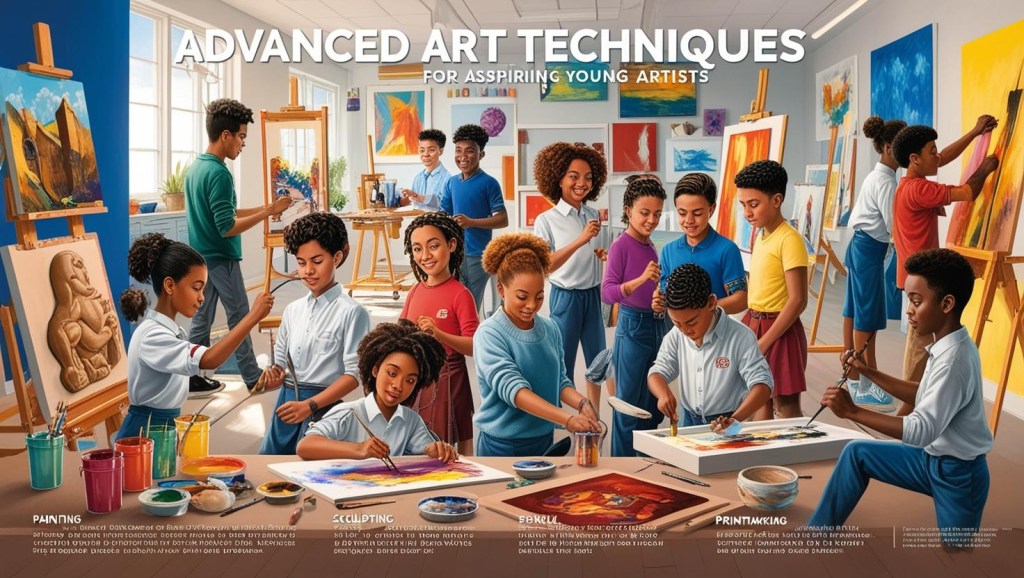
For experienced kids who want to take their skills to the next level, these steps encourage more precision and creativity.
- Study Real Tigers:
Before drawing, encourage kids to look at photos or illustrations of real tigers. Observing details is the key to creating lifelike art.
- Start with a Skeleton:
- Sketch a basic skeleton with simple shapes to understand the tiger’s posture and movement. Add muscle shapes to give the drawing structure.
- Work on Proportions and Fur Detail:
- Pay special attention to the proportion between the head and body. Tigers have broad foreheads and muscular builds. Draw fur in layers, using fine strokes to mimic its texture.
- Add Depth with Shading:
- Use cross-hatching techniques or soft pencils for shading. Gradually layer colors to show the tiger’s fur transitioning between orange, black, and white.
- Include the Tiger’s Environment:
- Place the tiger in a natural setting, like a jungle or grassland, to add more dimension and storytelling to the piece.
These techniques will encourage aspiring artists to think critically about form, color, and detail.
Tips for Parents and Educators
Encouraging kids to draw can feel intimidating, but it doesn’t have to be. Here’s how you can help foster their creativity and confidence:
- Provide the Right Tools:
Have age-appropriate art supplies ready, like pencils, crayons, markers, and erasers.
- Celebrate Progress:
Focus on effort rather than perfection. Celebrate each drawing as an accomplishment.
- Offer Guidance, Not Corrections:
Instead of fixing their work, ask open-ended questions like “What could make this even more fun?”
- Explore Tiger Facts:
Use the drawing activity as a chance to teach kids about tigers—their natural habitats, diets, and why we need to protect them.
- Share Their Art:
Encourage kids to share their finished artwork. This builds pride and confidence in their skills.
Share Your Roar 🐯
Drawing tigers is not just a fun activity—it’s a way for kids to explore their creativity, improve their art techniques, and learn about one of nature’s most fascinating creatures. Whether they’re sketching cartoon tigers or lifelike depictions, there’s something magical about seeing their ideas come to life on paper.
 Easy Drawing For Kids
Leave a comment